
What is Kwila Decking? NZ's Most Popular Hardwood Explained
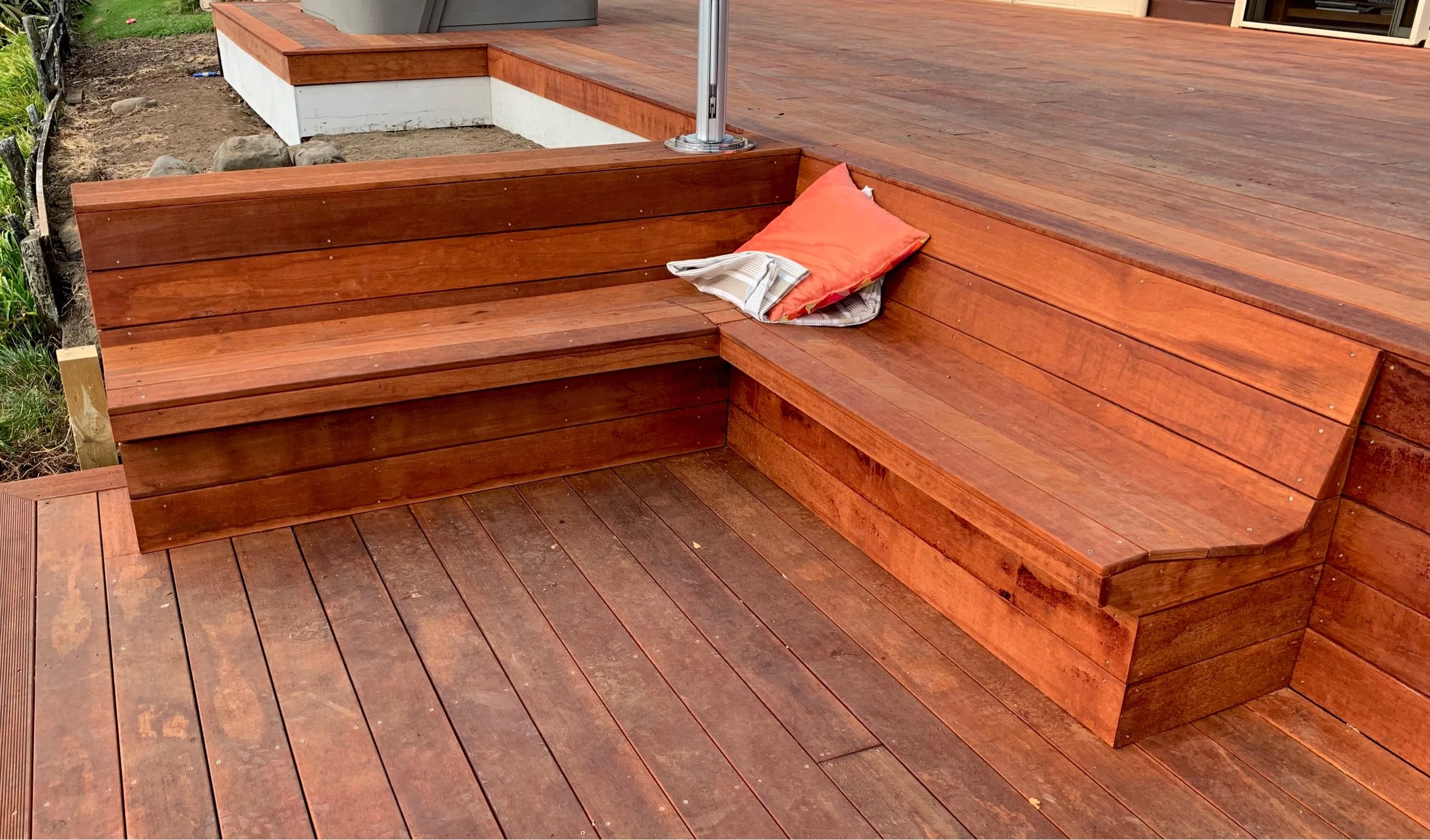
If you've ever admired a warm, reddish-brown deck on a Tauranga home and asked what timber it's made from, the answer is almost certainly Kwila. It's been New Zealand's go-to hardwood decking choice for decades, and for good reason. But it's also a timber that generates more questions than most — particularly around tannin bleed, maintenance, and whether it's still the right choice given the composite decking options now available.
Here's an honest, builder's-eye view of what Kwila is, what it does well, where it falls short, and how to decide whether it's right for your Tauranga home.
What is Kwila?
Kwila (also known as Merbau) is a dense tropical hardwood sourced primarily from Papua New Guinea and parts of Southeast Asia. It's been used in New Zealand decking for well over 30 years and remains the most widely specified hardwood decking timber in the country.
It's classified as a Class 2 durable hardwood under NZ standards, meaning it's rated for 15 to 25 years of above-ground exterior use without chemical treatment. Well-maintained Kwila decks regularly exceed this, with 25 to 30 year lifespans common in protected or well-ventilated installations.

Kwila has an air-dry density of approximately 870 kg/m³ and a Janka hardness of 8.8 kN, making it one of the hardest decking timbers available in New Zealand. For reference, that's harder than Garapa, and significantly harder than treated pine. In practice it means Kwila resists denting and surface wear extremely well, handles heavy foot traffic, and doesn't mark easily from outdoor furniture.
Most Kwila sold in New Zealand today is FSC certified, sourced from independently audited, sustainably managed forests. If you're buying Kwila, always ask for FSC documentation. If a supplier can't produce it, that's a meaningful red flag.
What Does Kwila Look Like?
Fresh Kwila boards range from yellow-brown to a deep, rich reddish-brown, with a slightly interlocked grain and characteristic golden mineral flecks visible in the surface. It's a warm, distinctive-looking timber that photographs particularly well and suits a wide range of home styles from traditional brick and weatherboard to contemporary cedar and plaster.
Like all hardwoods, Kwila will silver off naturally to a driftwood grey if left untreated. Many homeowners prefer this weathered look, particularly for coastal properties where it suits the environment. Oil it consistently and it holds its warm reddish-brown colour for the life of the deck.
Why Kwila Has Been So Popular in Tauranga
Tauranga's combination of UV exposure, coastal salt air, humidity, and warm summers is genuinely demanding on decking materials. Kwila's high natural oil content makes it well-suited to these conditions in ways that treated pine simply can't match.
Its natural oils provide built-in resistance to moisture, decay, and wood-boring insects without chemical treatment. This matters particularly in Tauranga's coastal suburbs where salt air accelerates the deterioration of lesser materials.
Kwila is also dimensionally stable. It has low shrinkage properties and doesn't move significantly with seasonal temperature and humidity changes, which means boards stay flat, gaps stay consistent, and the deck surface remains even over time.
It's also genuinely good-looking in the Bay of Plenty context. The rich warm tones suit the region's outdoor lifestyle and the types of homes being built and renovated across suburbs like Bethlehem, Papamoa, Mount Maunganui, and Ōtūmoetai.

The Tannin Question — What You Need to Know
This is the one thing about Kwila that catches homeowners off guard, and it's worth being completely upfront about it.
Kwila is a tannin-rich timber. In the first weeks and months after installation, it will leach a dark reddish-brown tannin run-off when it rains or when the deck is wet. This run-off will stain concrete, pavers, and any light-coloured surface it drains onto if it's not managed correctly.
On most decks this isn't a major problem with the right preparation. Applying a penetrating oil to all four sides of the boards before installation significantly reduces tannin bleed. Keeping the deck clean in the early months and washing run-off from surrounding surfaces before it dries makes a real difference.
Where tannin bleed becomes a genuine issue is near pools, over light-coloured paving that can't be regularly cleaned, or in situations where run-off goes somewhere it can't easily be washed away. In these situations Garapa is a more practical choice because it doesn't have this characteristic.
We always discuss the tannin question with clients during the quote visit so there are no surprises after installation.
Kwila vs Garapa — Which Hardwood is Right for You?
Both are Class 2 durable hardwoods with comparable lifespans, similar maintenance requirements, and similar installed cost. The choice between them generally comes down to three things.
Colour preference. Kwila is warmer and richer. Garapa is paler and more contemporary. If you're matching an existing outdoor aesthetic or have strong preferences either way, this is often the deciding factor.
Sun exposure. Garapa's lighter colour keeps it noticeably cooler underfoot in direct summer sun. For north-facing decks, poolside areas, and any space where bare feet are common through Tauranga's summer, this is a real advantage for Garapa. Kwila on a north-facing deck in full sun can become uncomfortably hot on a summer afternoon.
Tannin tolerance. If your deck drains near a pool, over light concrete, or onto pavers that would be difficult to clean regularly, Garapa's tannin-free nature makes it the more practical choice. If neither of these applies, Kwila's tannin bleed is manageable with proper preparation.
Kwila vs Composite Decking
This is the comparison that comes up most often in quote conversations right now, and it deserves a straight answer.
Kwila is a better-looking, more natural product than composite. The warmth of real timber, the grain character, and the way it ages are things composite products work hard to replicate but never quite achieve. If the look and feel of natural timber matters to you, Kwila wins.
Composite wins on maintenance. Once it's installed, a composite deck needs nothing beyond an occasional wash-down. No oiling, no staining, no periodic sanding of checking boards. For investment properties, holiday homes, or homeowners who genuinely don't want any ongoing deck maintenance, composite is the honest recommendation.
On cost, Kwila is typically less expensive to install than composite upfront. Over a 15 to 20 year period the ongoing maintenance costs narrow the gap considerably, but Kwila's longevity and lower initial outlay mean it often represents better value for homeowners who are prepared to maintain it.
How Long Does Kwila Decking Last?
Kwila is rated as a Class 2 durable hardwood for 15 to 25 years in above-ground applications. In practice, well-installed and properly maintained Kwila decks in Tauranga regularly reach 25 to 30 years before needing replacement.
The variables that most affect lifespan are ventilation beneath the deck, board spacing for drainage, whether the subframe was built correctly to NZS 3604 specification, and how consistently the deck is oiled and cleaned over its life.
A Kwila deck installed on a well-engineered subframe with adequate ventilation and oiled every couple of years will significantly outlast the minimum rating.
Kwila Maintenance — What's Actually Involved
Kwila's maintenance requirements are modest compared to treated pine, but they do need to happen consistently to get the most out of the timber.
Year one: Apply a penetrating oil to all four sides of each board before installation to reduce tannin bleed and seal the end grain. Apply a face coat after installation. Clean tannin run-off from surrounding surfaces in the first few months before it has a chance to set.
Ongoing: Clean annually with a stiff brush and mild detergent to clear gaps between boards and remove surface mould, which can be a slip hazard in wet weather. Re-oil every one to two years depending on how much direct sun and weather exposure the deck receives. Move pot plants and outdoor furniture periodically to prevent moisture stains on the surface.
What to avoid: High-pressure water blasting damages the timber fibres. Use low pressure washing if a brush and bucket aren't enough.
How Much Does a Kwila Deck Cost in Tauranga?
Kwila sits comfortably in the mid-range for decking materials, more expensive than treated pine but comparable to Garapa and significantly less expensive than premium composite brands when upfront cost alone is compared.
As a rough installed guide for Tauranga residential decks:
Treated pine deck: $400 to $600 per m² installed
Kwila or Garapa hardwood deck: $600 to $900 per m² installed
Composite deck: $800 to $1,200 or more per m² installed depending on brand and finish
Site-specific factors like section slope, deck height, subframe complexity, balustrades, picture framing, and stairs all affect the final price. The best way to get an accurate number is a free on-site measure, which we turn around within a few days of visiting.
Is Kwila Right for Your Tauranga Home?
Kwila is an excellent choice for most Tauranga residential decks. It suits a wide range of home styles, performs well in our coastal climate, has decades of proven performance in NZ conditions, and delivers a warmth and character that composite alternatives genuinely struggle to match.
It's not the ideal choice where the deck is in full north-facing sun with no shade, where it drains near a pool or light-coloured paving, or where you want genuinely zero ongoing maintenance. In those situations, Garapa or composite are worth serious consideration.
If you'd like to see Kwila samples alongside Garapa, pine, and composite before making a call, give Craig a call on 027 630 2735 or request a free on-site quote below.
Klinks Fences & Decks are Tauranga-based deck builders specialising in Kwila, Garapa, composite, and pine decking across the Bay of Plenty. Free on-site quotes, no hidden costs.