
What is Garapa Decking? A Tauranga Homeowner's Guide
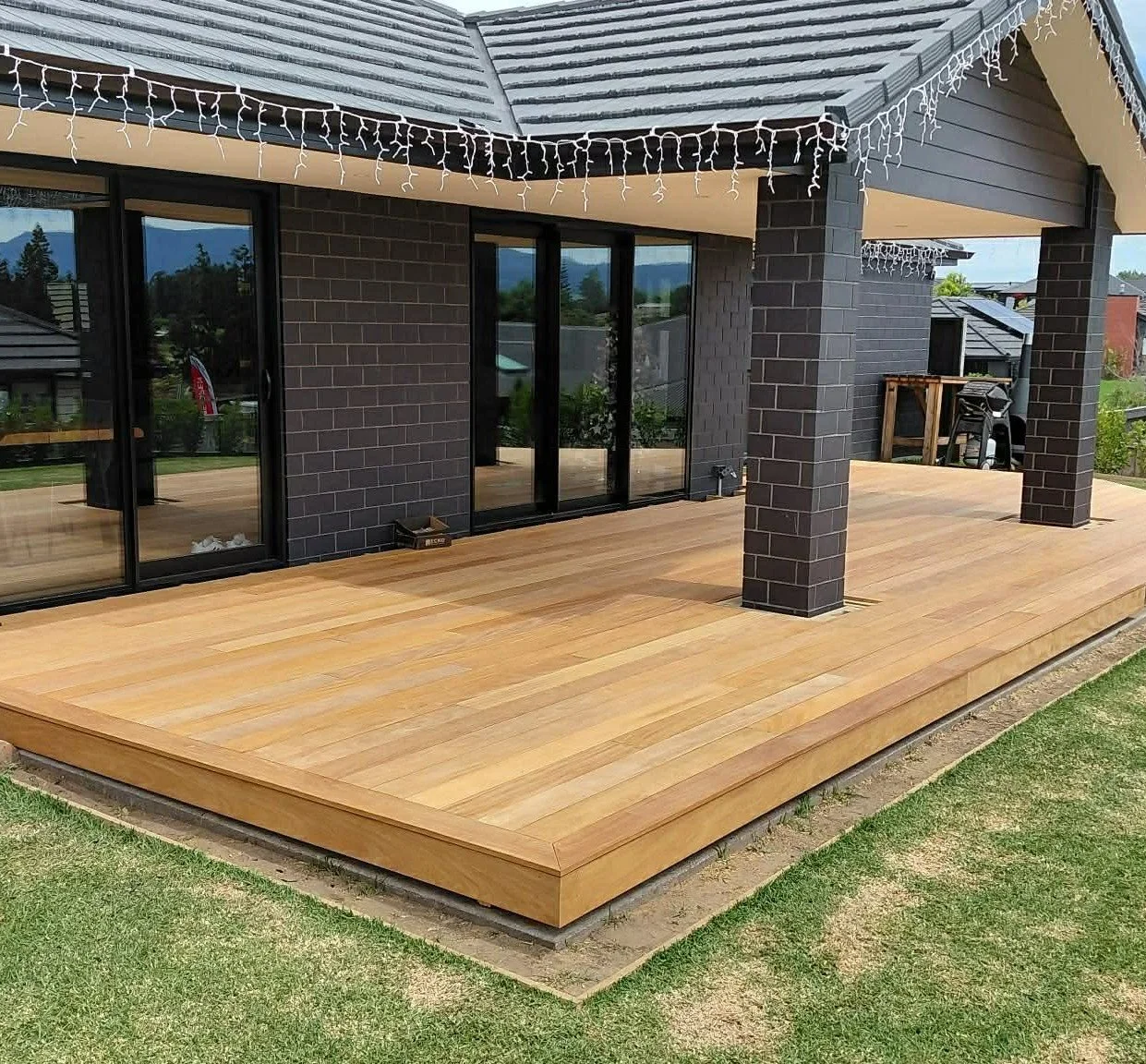
Garapa is one of those timbers that deck builders love and homeowners have never heard of — until they see one installed, and then they want to know exactly what it is. If you've come across it while researching decking options for your Tauranga home, here's everything you need to know before making a decision.
What is Garapa?
Garapa (botanical name Apuleia leiocarpa) is a dense, naturally durable hardwood sourced from sustainably managed tropical forests in South America, primarily Brazil and Argentina. In New Zealand it's classified as a Class 2 durable hardwood, which means it's rated for long-term exterior use without chemical treatment.
It's sometimes called Brazilian Ash, though it's not related to the ash family. The name refers to its pale, clean appearance rather than its species.
Garapa has an air-dry density of approximately 900 kg/m³ and a Janka hardness of 7.3 kN. That makes it slightly denser than Kwila, but not as hard on the Janka scale. It is still a dense, durable hardwood that performs well for residential decking and is significantly harder than treated pine.
The key distinction is that density and hardness are not the same thing. Garapa is slightly denser by weight, while Kwila has the higher Janka hardness rating, which means it has stronger resistance to denting and surface indentation.
Most Garapa sold in New Zealand is FSC certified, meaning it's sourced from responsibly managed forests that meet internationally audited environmental and social standards.
What Does Garapa Look Like?
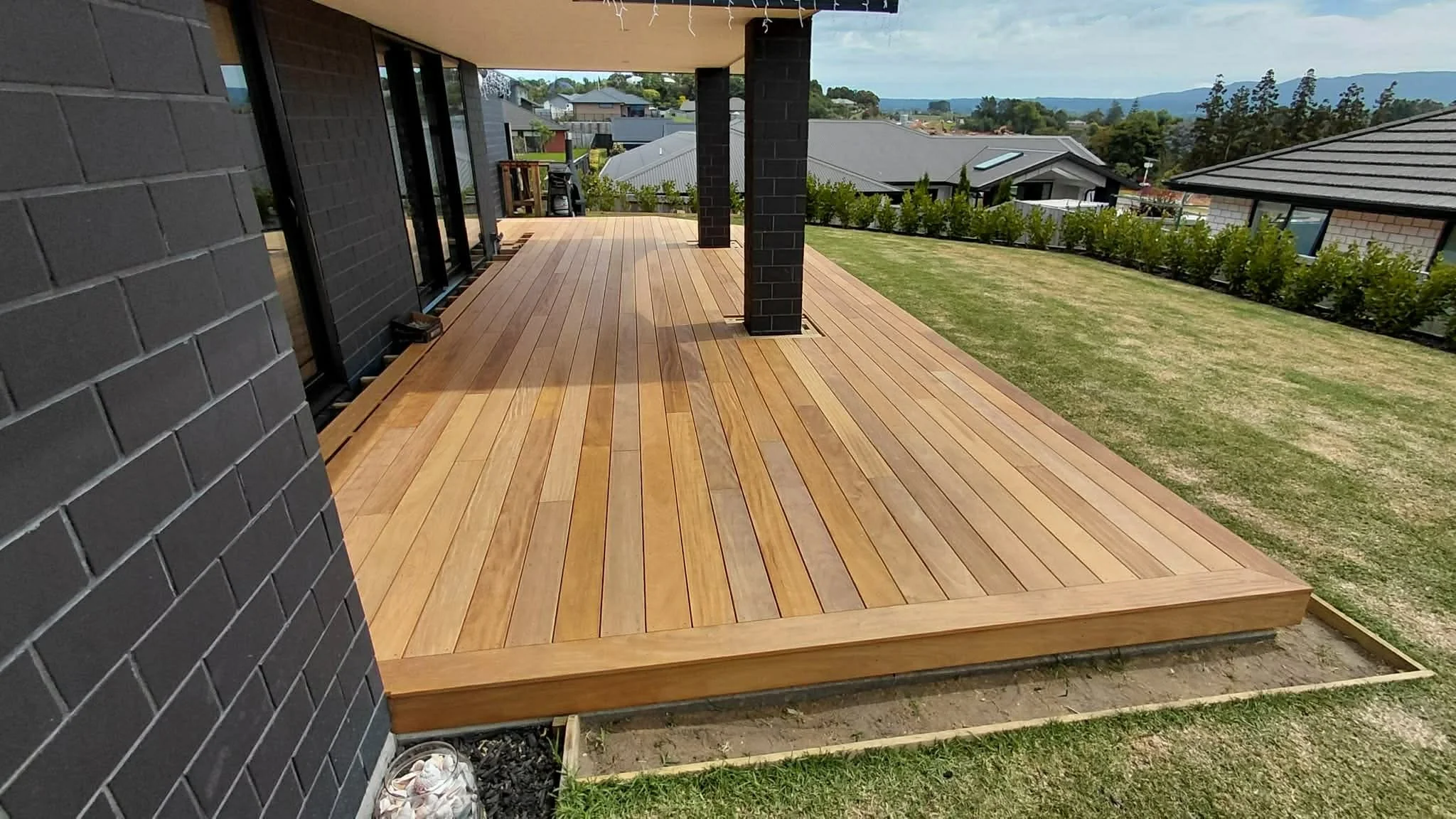
Garapa's most distinctive characteristic is its colour. Fresh boards have a warm, pale gold tone with a fine, consistent grain, closer in appearance to European oak than to the deeper reddish-brown of Kwila. This lighter colour is one of the main reasons it's popular with homeowners who want a hardwood deck without the heavy, dark look that Kwila can give.
Like all hardwoods, it will silver off naturally if left untreated, developing a weathered, driftwood-grey patina that suits coastal and contemporary homes particularly well. Oil it regularly and it holds its golden colour for years.
Why Garapa Works Well in Tauranga
Tauranga's climate is harder on decking than most homeowners realise. High UV levels, coastal salt air, warm humid summers, and wet winters all accelerate the deterioration of lesser materials. Garapa handles all of these conditions well, and has one specific advantage that makes it particularly well-suited to Bay of Plenty homes.
It stays cooler underfoot than Kwila. This is a genuine practical benefit rather than a marketing claim. Garapa's lighter colour reflects more heat than darker timbers, making it comfortable for outdoor use even in direct summer sun. For north-facing decks, poolside areas, and any deck where bare feet are the norm through summer, this matters considerably. Kwila's darker colour absorbs more heat and can become uncomfortably hot on a Tauranga summer afternoon.
It doesn't leach tannins. Kwila is notorious for its reddish-brown tannin runoff during the first season. It stains concrete, pavers, and any light-coloured surface it drains onto. Garapa doesn't have this problem, which makes it a much more practical choice where the deck drains onto lighter paving or near a pool area.
It's naturally resistant to rot, decay, and insects without the need for chemical treatment, which is important in Tauranga's humidity where untreated or under-treated timbers can deteriorate quickly.
Garapa vs Kwila — Which Should You Choose?
This is the question we get asked most often when homeowners are comparing hardwood options. Both are excellent decking timbers, but they suit different situations.
Choose Garapa if:
Your deck faces north or receives strong afternoon sun — the cooler surface temperature makes a real difference
You're building near a pool or over light-coloured paving — no tannin leaching means no staining
You prefer a lighter, more contemporary aesthetic — Garapa's pale gold suits modern homes well
You want a slightly more affordable hardwood without compromising on durability
Choose Kwila if:
You prefer a richer, warmer timber colour
Your deck is in a shaded or southerly aspect where surface temperature isn't a concern
You're replacing or matching an existing Kwila deck
Both timbers will outlast treated pine by a significant margin and both require similar maintenance, either oiling every one to two years to maintain their colour, or leaving them to silver naturally if you prefer the weathered look.
Garapa vs Composite Decking
If low maintenance is your priority, composite decking is worth considering alongside Garapa. Here's the honest comparison.
Garapa gives you a genuine natural timber deck with the character and feel that composite can't fully replicate. It requires oiling annually and occasional cleaning, and it will develop natural movement over time. Its upfront cost is moderate for a hardwood.
Composite requires no oiling, no staining, and nothing more than a wash-down. It won't move, splinter, or change colour the way timber does. The upfront cost is higher but the ongoing maintenance cost is effectively zero.
For Tauranga homeowners who want the look and feel of real timber, Garapa is the better choice. For those who want to build it and forget it, particularly on holiday homes or investment properties, composite wins on convenience.
How Long Does Garapa Decking Last?
A well-installed Garapa deck has a lifespan of 25 to 30 years or more. That lifespan assumes correct subframe specification, adequate ventilation beneath the deck, proper board spacing for drainage, and periodic oiling.
In practice, a well-built Garapa deck in Tauranga should comfortably outlast two or three pine decks built over the same period.
Garapa Maintenance — What's Actually Involved?
Garapa is lower maintenance than many homeowners expect for a natural hardwood. Here's what's needed.
Year one: Oil all four sides of each board before installation, and apply a face coat after installation. This is critical. Skipping this step leads to surface checking and uneven weathering that's difficult to reverse.
Ongoing: Clean annually with a stiff brush and mild detergent to clear gaps and remove surface mould. Re-oil every one to two years depending on sun and weather exposure to maintain colour and surface protection.
What to avoid: High-pressure water blasting damages the timber fibres. Use low-pressure washing if you need more than a brush and bucket.
How Much Does Garapa Decking Cost in Tauranga?
Garapa sits in the mid-to-upper range of decking timber costs, more expensive than treated pine, broadly comparable to Kwila, and generally less expensive than composite over a 10-year period when maintenance costs are factored in.
As a rough installed guide for Tauranga residential decks:
Treated pine deck: $400 to $600 per m² installed
Garapa or Kwila hardwood deck: $600 to $900 per m² installed
Composite deck: $800 to $1,200 or more per m² installed depending on brand and finish
These ranges vary based on site difficulty, height, subframe complexity, and any finishing details like picture framing, balustrades, or stairs. The best way to get an accurate price is a free on-site measure and quote.
Is Garapa Decking Right for Your Home?
Garapa is an excellent choice for most Tauranga homes, particularly where the deck gets strong sun exposure through summer, you're building near a pool or over light paving, you want a contemporary lighter timber aesthetic, or you want hardwood durability without committing to the higher cost of exotic species.
It's not the right choice if you want zero maintenance — composite decking is the honest answer for that. And if you already have a Kwila deck and are extending or replacing boards, matching Garapa to existing Kwila isn't straightforward given the colour difference.
If you'd like to see Garapa samples alongside Kwila, pine, and composite options before deciding, give Craig a call on 027 630 2735 or request a quote below.
Klinks Fences & Decks are Tauranga-based deck builders specialising in hardwood, composite, and pine decking across the Bay of Plenty. Free on-site quotes, no hidden costs.