
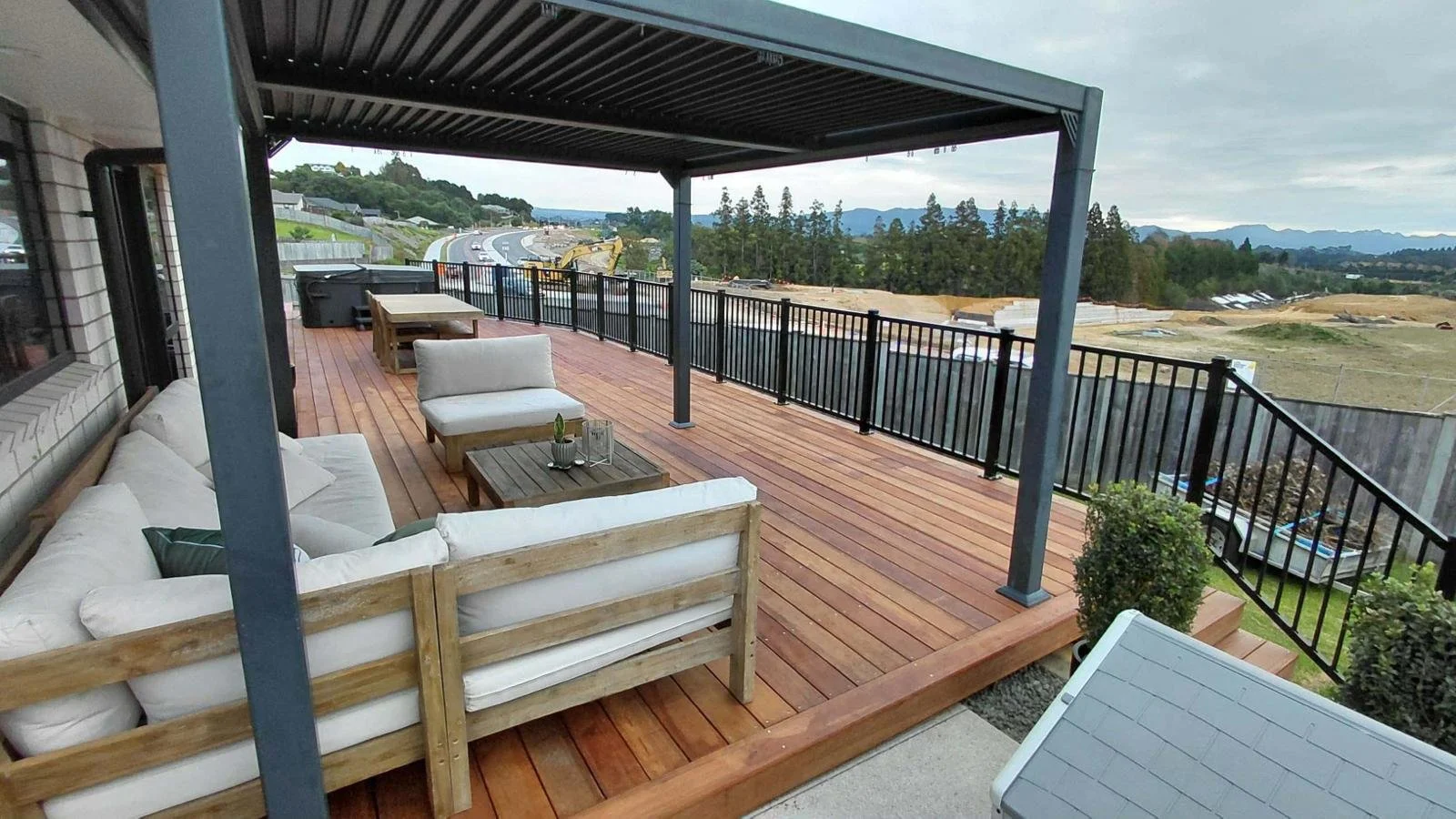
Raised Decks in Tauranga
Tauranga is a hilly city. From the slopes above Mount Maunganui to the elevated sections in Bethlehem, Welcome Bay, and across the harbour in Omokoroa, a lot of Bay of Plenty homes sit on sections where the ground drops away from the house. That is exactly the scenario where a raised deck does not just make sense, it transforms the property.
What Is a Raised Deck?
A raised deck is any deck that sits more than 300mm above the ground at its highest point. That is the threshold that separates a ground-level deck from a raised one, and it has real implications for how the deck is designed, specified, and costed.
Heights vary enormously. Some raised decks sit just 400 or 500mm off the ground on a gently sloping section. Others are well over a metre high on steeper sites, effectively elevated platforms with a more substantial structure underneath. The structural requirements for each scenario are quite different, which is why it pays to have an experienced builder assess your site before any decisions are made.
Building consent becomes a requirement at 1500mm above ground level. Below that height, consent may still be required depending on other factors such as deck size, proximity to boundaries, or whether the deck is attached to the house, but height alone does not trigger it until you reach that 1500mm mark.nt.
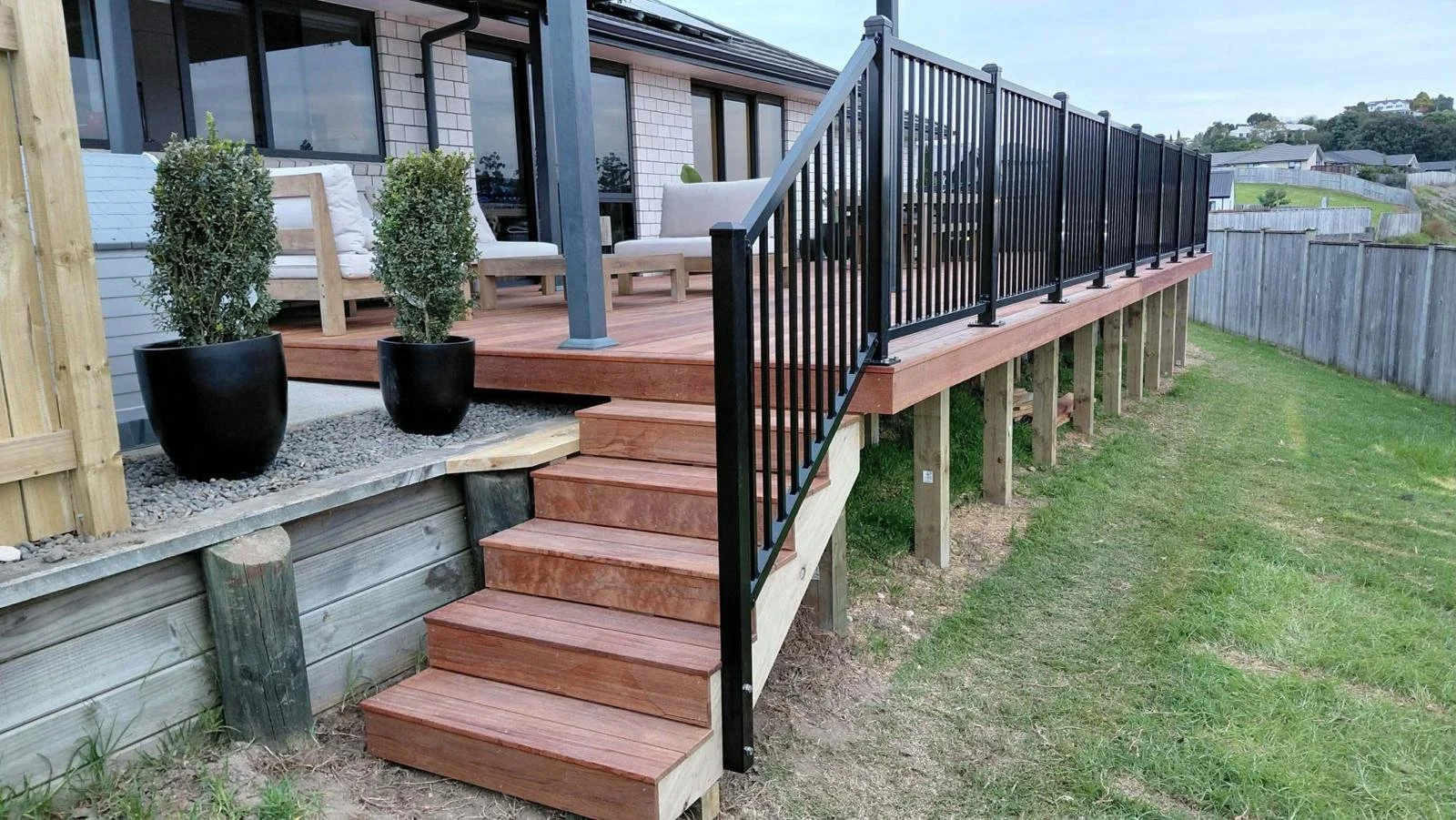
Is a Raised Deck Right for Your Property?
Raised decks come into their own on sloped sections where a ground-level deck simply isn't possible. If your back garden drops away from the house, a raised deck lets you step directly out from the living room onto a flat, usable surface with no steps, no slope, no awkward transition. That seamless indoor-outdoor flow is enormously valuable in a Tauranga home where the living room effectively doubles as an outdoor room for six months of the year.
Elevated decks also create privacy in a way ground-level decks can't. You're above fence height, which means you're also above the sight lines of neighbours on lower sections. For homes in tighter subdivisions, this can be genuinely transformative.
Views are another major factor. Mount Maunganui, the harbour, the Kaimai Ranges; Tauranga is full of properties with extraordinary outlooks that are only accessible from height. A well-placed raised deck can capture a view that's barely visible from ground level.
On the downside, raised decks are more expensive than ground-level decks. The structure is more complex, engineering may be required, and there's more material involved. If budget is tight, it's worth having a frank conversation early about what's achievable.
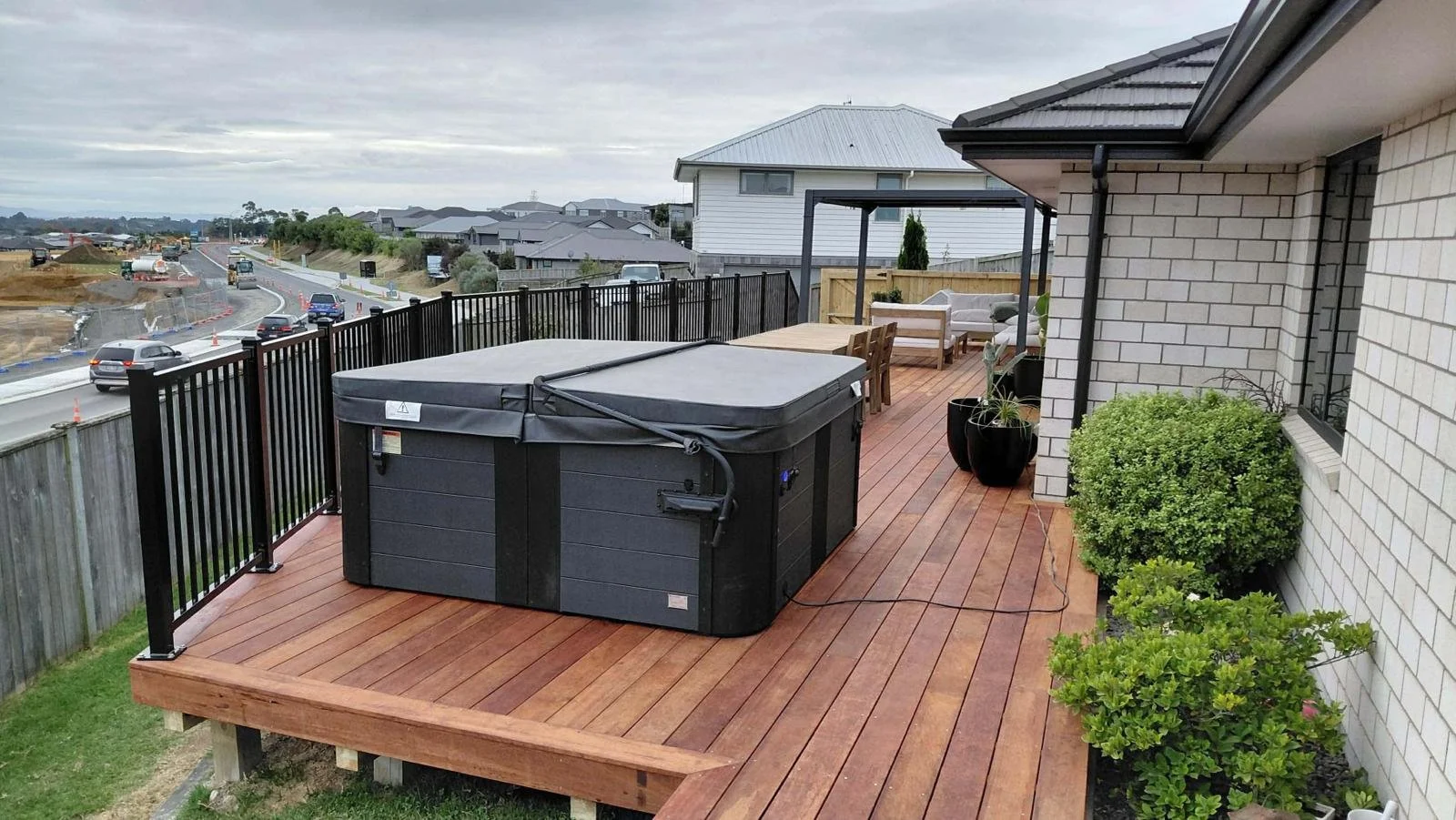
Structure and Foundations
A raised deck is typically supported on timber posts set into concrete footings. Under the New Zealand Building Code, concrete footings are typically 125x125mm as a minimum specification. The right footing size for your specific build will depend on the post loads, soil conditions, and the overall deck design.
For decks below 1500mm in height, engineering may be required depending on the complexity of the build and the site conditions. Above 1500mm, where building consent is required, engineering sign-off may form part of the consent process. Klinks will give you a clear picture of what your specific project is likely to need once we have seen the site.
Timber and Material Choices
The same material choices available for ground-level decks apply to raised decks — treated pine, hardwood, or composite — with some additional considerations.
Substructure
Posts, bearers, and joists are almost always treated pine or steel regardless of what the decking surface is.
Engineering
The engineer's spec will confirm the required treatment level based on the height, exposure, and ground conditions.
Composite decking
Some clients prefer composite decking on raised decks specifically because it eliminates the oiling obligation and tends to perform more consistently over time.
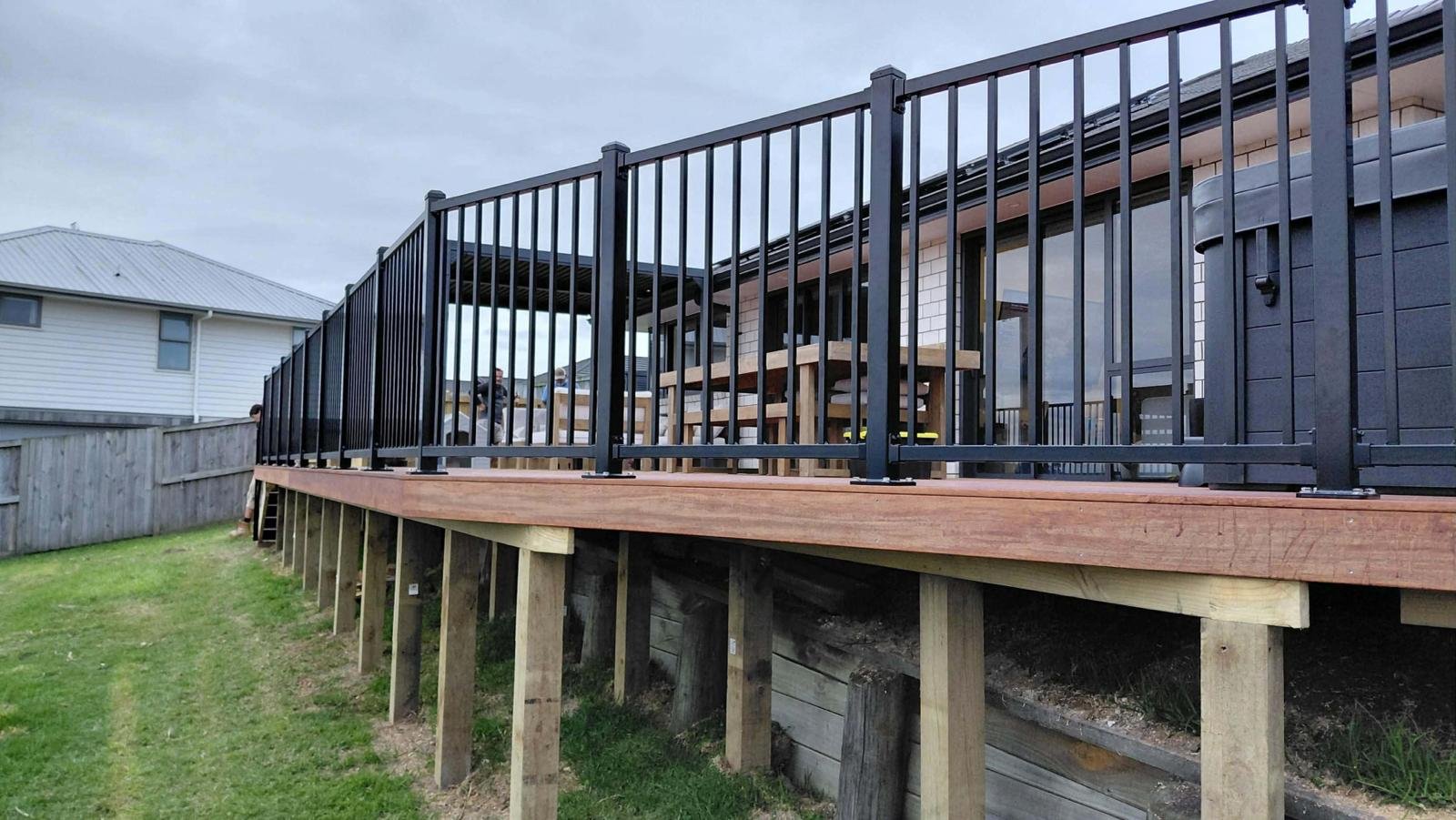
How Klinks Builds Raised Decks
Raised decks are one of our specialties. We've built them across Tauranga's steepest and most challenging sections, from compact elevated platforms off second-storey living rooms in the Mount to large multi-bay structures on serious slope in Bethlehem and Welcome Bay.
We start with the site visit and a conversation about how the space will be used. From there we design the deck to code, work with your engineer on the structural details, and manage the full build, including foundations, framing, decking, balustrades, steps, and any integrated features like built-in seating or a pergola above.
Frequently Asked Questions
How high can a raised deck go without special engineering?
A raised deck can usually be built without building consent if the fall height is no more than 1.5 metres. However, it must still comply with the New Zealand Building Code. Engineering is not based on height alone. A simple timber deck may be able to use standard NZS 3604 details, while a higher, more complex, or non-standard deck may need specific engineering design. A safety barrier is generally required where someone could fall 1 metre or more.
Do I need balustrades on a raised deck?
Yes. The New Zealand Building Code requires balustrades on any deck surface more than 1 metre above the ground. The balustrade must be at least 1 metre high and designed so children cannot climb through or over it. We'll design the balustrade to meet these requirements as a standard part of the build.
How do raised deck posts affect the garden below?
Concrete footings are set at the base of each post, which does require some excavation. The impact on the garden is usually minimal — posts are typically 100–150mm square — but it's worth considering access to the area beneath the deck. Once the deck is up, the area underneath can often be used for storage, garden beds, or just left as a shaded space.
Can I enclose the space under a raised deck?
Yes, and it's a popular option. Lattice screening, timber cladding, or planting around the base of a raised deck can turn the underneath into a tidy, sheltered storage area. This can be designed in from the start or added later.
How long does a raised deck take to build?
Depending on height, complexity, and size, typically one to two weeks. Factor in time for the consent to be granted before work starts — council processing times vary.
What maintenance does a raised deck need?
Annual cleaning, regular oiling or staining if you've chosen timber, and a periodic check of fixings, balustrades, and post bases. Posts set in or near the ground should be inspected for signs of moisture ingress. A well-maintained raised deck will last decades.