
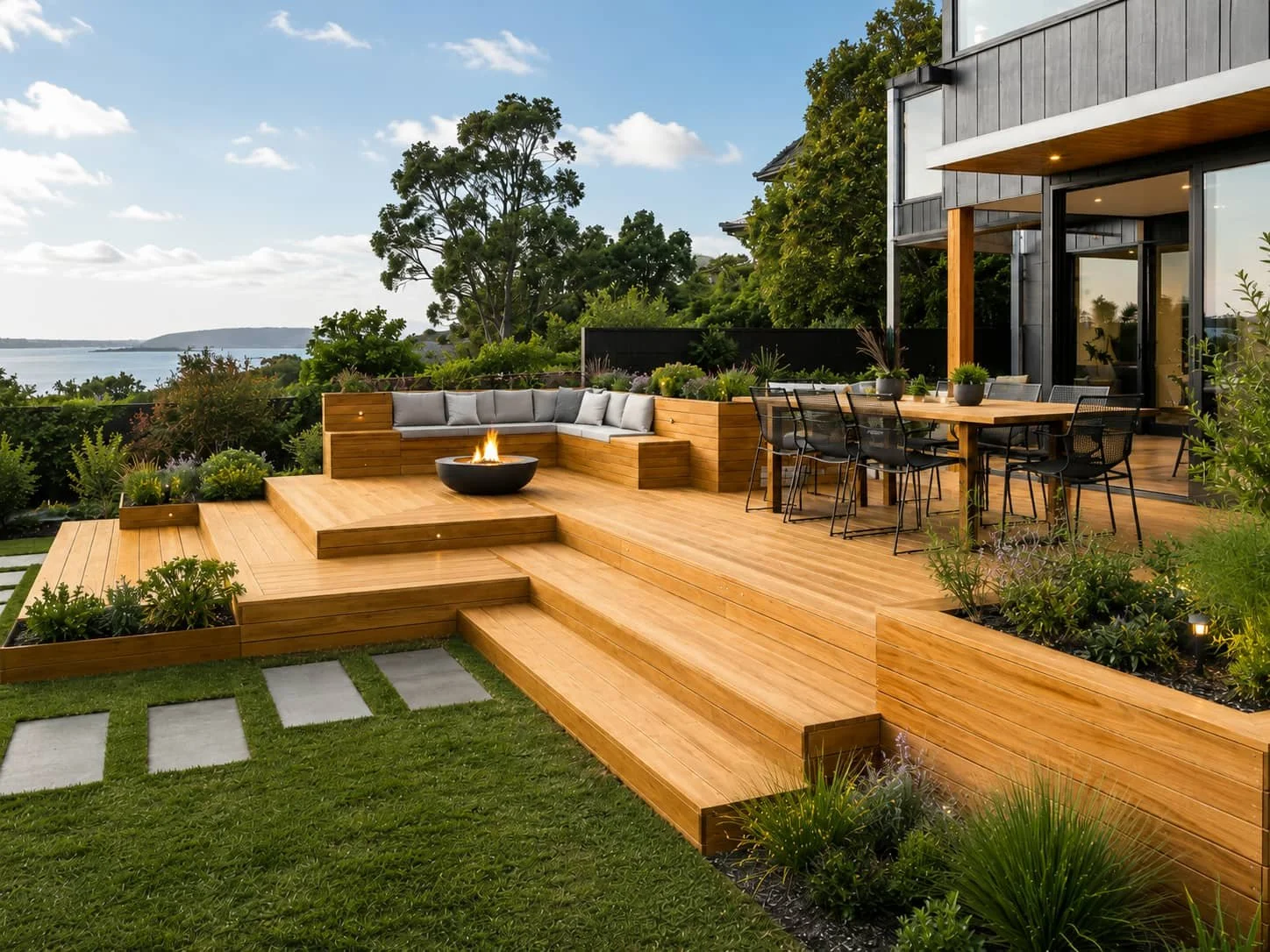
Multi-Level Decks in Tauranga
Some properties don't lend themselves to a single flat platform. iIf you have a section with serious slope, a split-level home, or a garden that drops away in tiers, a multi-level deck doesn't just solve a problem, it creates something genuinely spectacular. Multi-level decks are the most architecturally complex decks we build at Klinks, and they're also the most rewarding.
What Is a Multi-Level Deck?
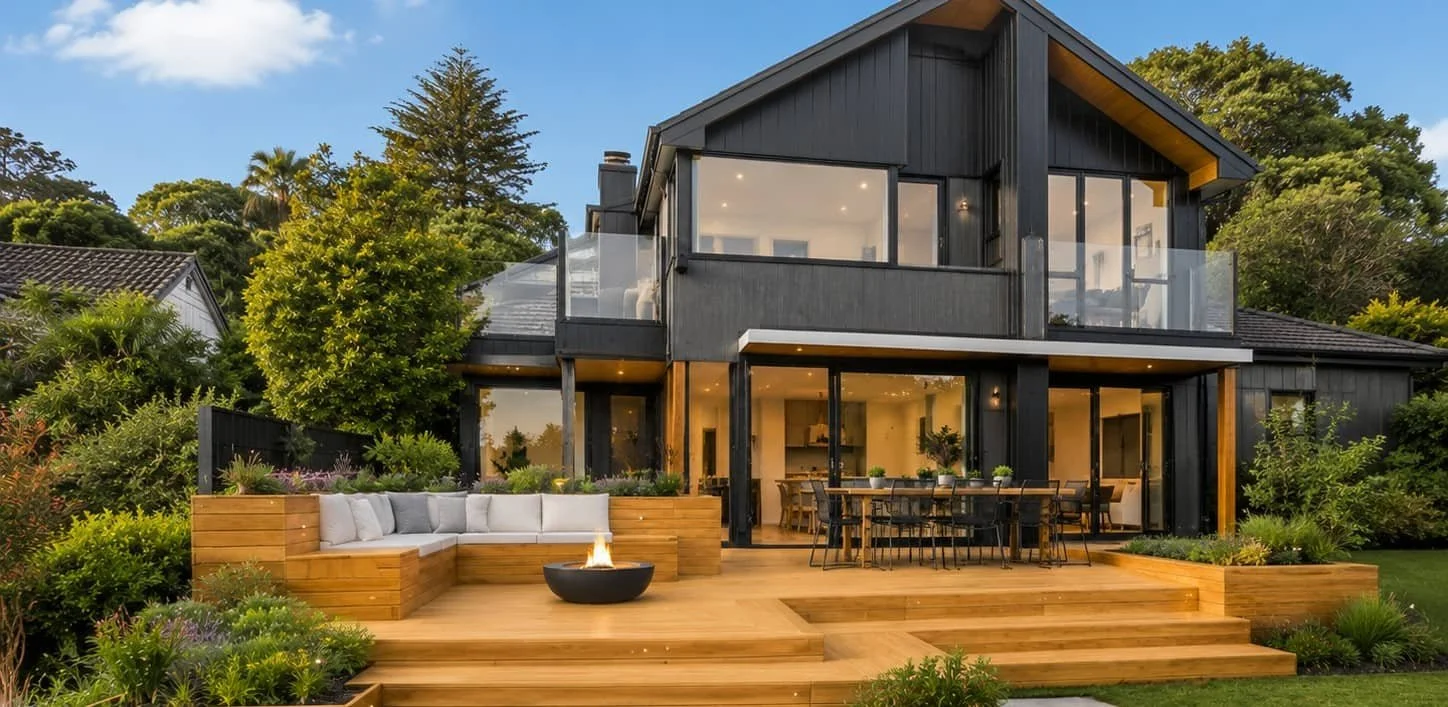
A multi-level deck is exactly what it sounds like: two or more deck platforms at different heights, connected by steps or stairs. They might be directly connected with a wide set of steps between a main upper deck and a lower platform, or they might be more separated, with distinct zones serving different purposes.
The lower level might be a ground-level platform at the garden, the middle level a main entertaining area off the living room, and the upper level a private retreat off the master bedroom. Each zone has its own function and character, but they work together as a unified outdoor living system.
When Does a Multi-Level Deck Make Sense?
Multi-level decks are the natural solution when a sloped section makes a single-level deck impractical or when you want to create defined outdoor zones. They're also a great fit for split-level homes where different living areas exit at different heights.
In Tauranga, the properties that most often call for multi-level decks include:
Steep sections in areas like Welcome Bay, Bethlehem, Otumoetai, and the Mount Maunganui hillside
Homes with multiple levels where living areas, bedrooms, and lower floors all need deck access
Larger sections where the client wants to define distinct spaces — dining, lounging, play area — without a single sprawling platform
Properties with significant views at different elevations, where each level captures a different outlook
Design Considerations
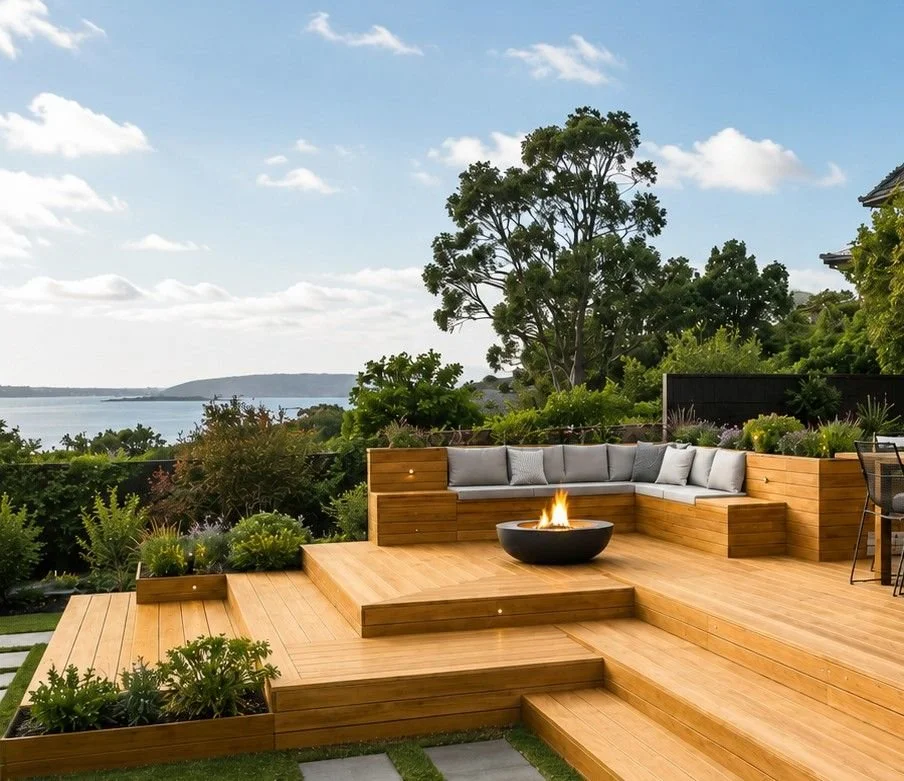
Multi-level deck design starts with understanding how people will move through the space. The flow between levels needs to feel natural with wide, comfortable steps that invite movement rather than narrow functional staircases that feel like an afterthought. Getting the step design right is one of the most important parts of a multi-level deck project.
Each level should have a clear purpose. The best multi-level decks feel like a considered sequence of outdoor rooms, not a stack of platforms bolted together. We spend time with clients at the design stage talking through how they actually live. Where do they like to have morning coffee? Where do the kids play? Where do they gather with friends for a summer dinner. We use that to drive the layout.
Structural complexity increases significantly with each level. Posts, beams, and bearers need to be sized for their specific loads, and the connections between levels, including stairs, need to be engineered properly. A multi-level deck that requires building consent needs a thorough structural specification from a qualified engineer.
Privacy and outlook at different levels is also worth thinking through. The upper level may be very open; the lower level may be more sheltered. Balustrade choices, pergola covers, and screening can be used to create very different atmospheres at each level while maintaining visual coherence across the whole structure.
Materials Across Multiple Levels
One of the nicest things about multi-level decks is the opportunity to use materials deliberately.
Complementary
Some clients use the same decking board throughout for a clean, unified look. Others use different board profiles or orientations at each level.
Composite
Some mix timber and composite. There are no rules — it's about what suits the home and the client's aesthetic.
Quality
What doesn't change is the quality expectation at every level. The structural framing, fixings, and foundations need to be right throughout.
Consent and Engineering
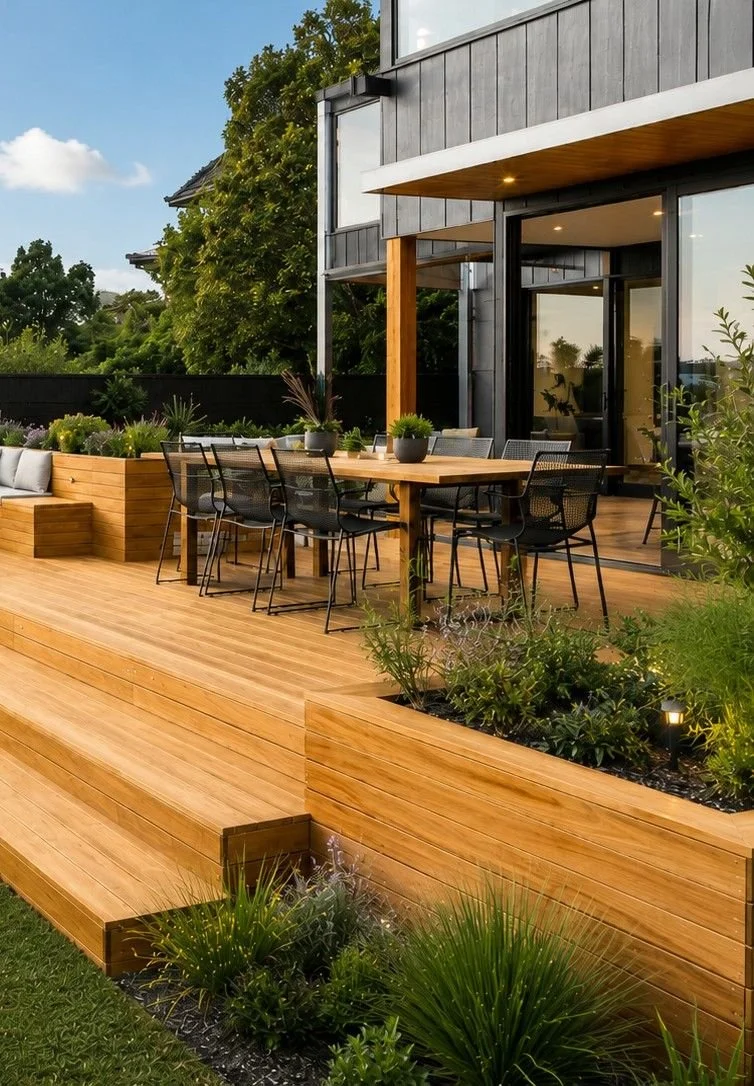
In New Zealand, a multi-level deck may need building consent if any level creates a fall height of more than 1.5 metres. Engineering is not triggered by height alone, but multi-level decks are more likely to need specific structural design because they involve more load, more bracing, more connections, and often more complex stairs and foundations.
A simple timber deck may be able to use standard NZS 3604 construction details, while taller or more complex multi-level decks may require an engineer to confirm the design is safe and compliant. Safety barriers are generally required where someone could fall 1 metre or more.
How Klinks Approaches Multi-Level Builds
Multi-level decks require more upfront planning than any other deck type. We'll spend more time at the design stage, working through the levels, the flow, the features, and the materials. We'll make sure the engineer has everything they need to produce a spec we can build to, and we'll keep you informed at every stage of the build.
The build itself is staged: foundations first, then framing level by level, then decking and features. It takes longer than a simple deck, and the site will be more disrupted during the process. But the result is a property transformation that justifies every day of it.
Frequently Asked Questions
How much more expensive is a multi-level deck than a single-level one?
We don't publish prices, but multi-level decks involve significantly more material and labour than single-level builds, plus the engineering and consent costs. Think of it as an investment in your property rather than a comparison to a simpler deck — it's a different product.
Can I add a second level to an existing deck?
Sometimes, but it's not always straightforward. Adding an upper level to an existing structure requires assessing whether the existing foundations and framing can take the additional load. In many cases, it's more practical and cost-effective to rebuild properly than to retrofit. We can assess your existing deck and give you honest advice.
Do all levels need to meet the same Building Code requirements?
Yes. Every level that's more than 1 metre above the ground needs compliant balustrades. Every level connected by stairs needs compliant step dimensions. The Building Code applies to the whole structure, not just the parts above a certain height.
How long does a multi-level deck take to build?
Typically two to four weeks depending on size and complexity. Add consent processing time on top of that — it's worth being realistic about the timeline from decision to finished deck.
Can I incorporate a pergola or covered area at one level?
Absolutely, and it's a popular approach. A covered upper level creates a sheltered outdoor room while the lower level stays open to the sky. We scope pergolas, shade structures, and privacy screens alongside deck builds all the time.