
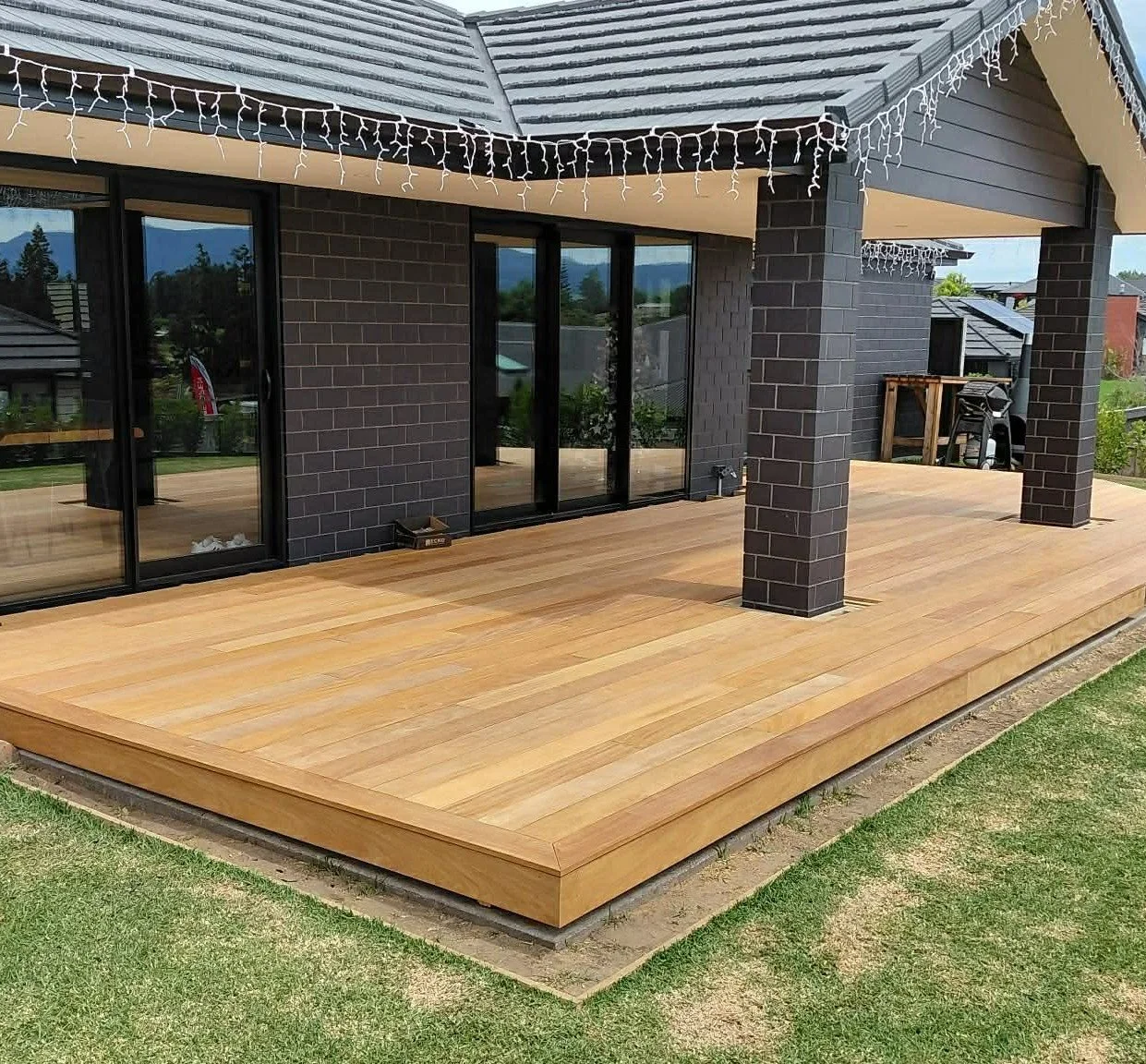
Ground-Level Decks in Tauranga.
If you've got a flat section in Papamoa, a compact back yard in Mount Maunganui, or a garden that just needs a hard-wearing outdoor surface, a ground-level deck is probably the first thing you picture. Low, unfussy, and incredibly practical, they're one of the most popular deck types we build at Klinks, and for good reason.
What Is a Ground-Level Deck?
A ground-level deck (sometimes called a low-level deck or platform deck) sits close to the ground, typically less than 300mm above the finished ground level at its highest point. That 300mm threshold is the point at which a deck transitions from ground-level to raised, which has implications for structural specification and cost.
Building consent for decks in New Zealand is governed by several factors. Height becomes a direct consent trigger at 1500mm above ground level, but other considerations including total area, proximity to boundaries, and whether the deck is attached to the house can require consent well before you reach that height. More on that below.
Structurally, a ground-level deck sits on short timber posts or concrete pads directly on or just above the soil. There is no void underneath that you would crawl into. The deck sits snug to the ground, which is part of what makes it so stable and visually grounded in the landscape.

Is a Ground-Level Deck Right for Your Property?
Ground-level decks suit flat or very gently sloping sections particularly well. They're a natural fit for newer subdivisions in Papamoa and Pyes Pa where sections tend to be flatter and more compact. If your section has significant slope, a ground-level deck becomes structurally trickier, you'd likely be looking at a raised or multi-level deck instead.
Think about how you want to use the space. Ground-level decks work brilliantly for:
Alfresco dining areas directly off the kitchen or living room
Garden entertaining spaces that connect lawn to house
Play areas where you want kids moving freely between deck and grass
Pool surrounds and spa pad areas
Side yards that would otherwise be wasted space
One thing worth knowing: because a ground-level deck sits close to the soil, ventilation is more limited than a raised deck. That makes timber specification critical.
H4 treated timber is the minimum for decking and framing in ground-contact proximity. Your Klinks team will talk through the right specification for your site conditions.
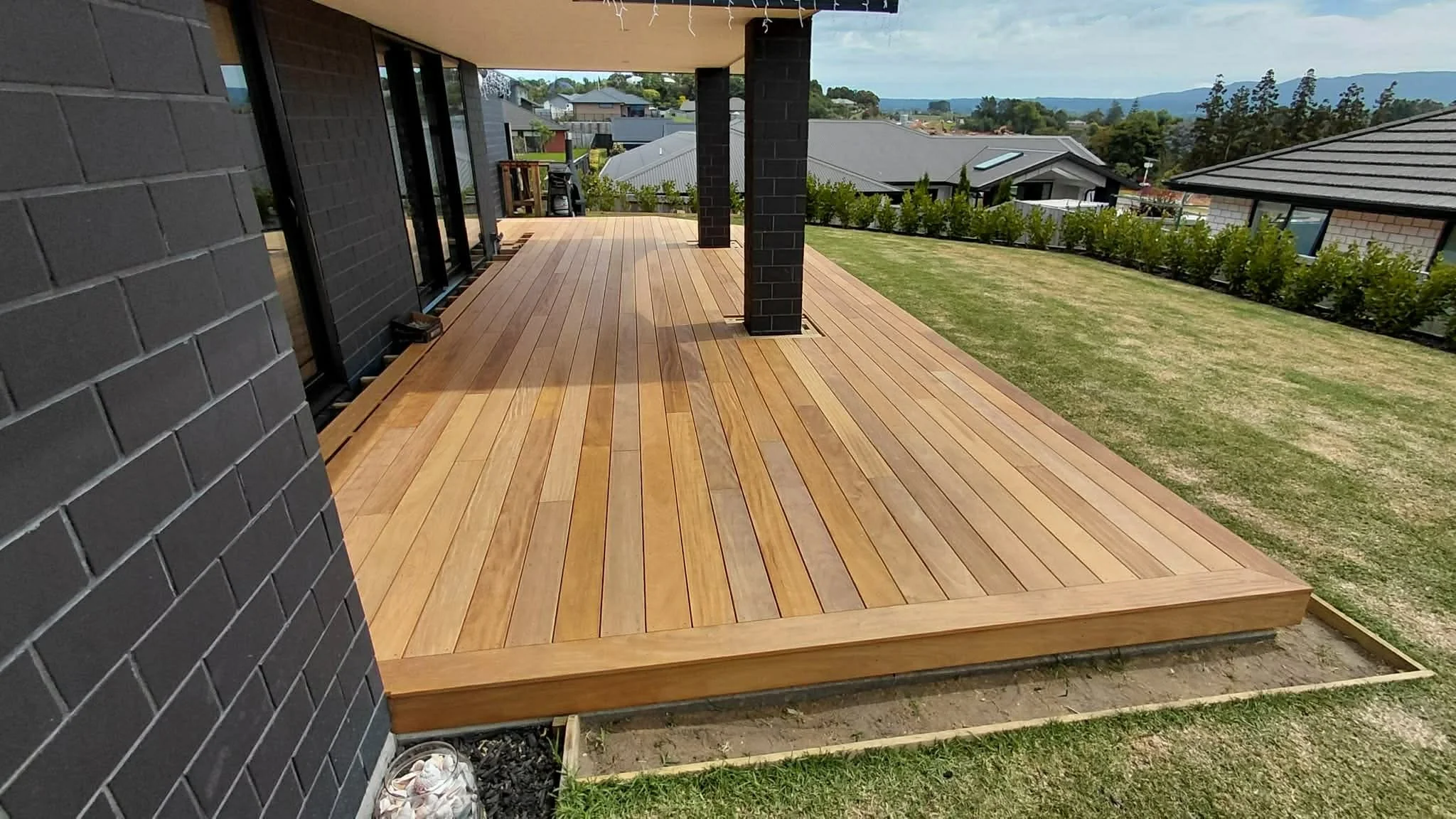
Design Considerations for Ground-Level Decks in Tauranga
Tauranga's climate is one of the best in New Zealand for outdoor living with long, warm summers, mild winters, and plenty of sunshine. But that sun is also intense, and UV exposure in the Bay of Plenty will age untreated timber quickly.
The orientation of your deck matters: north or west-facing decks catch the afternoon sun and become fantastic evening entertaining spots, while a south-facing deck in a shaded spot will hold moisture and require more maintenance.
Size is often the first question people have. A ground-level deck that genuinely functions as an outdoor room needs to be at least 20–25 square metres for a table and chairs with room to move.
Smaller than that and it starts to feel cramped. Bigger sections in Papamoa often accommodate 40–60sqm decks that become a true outdoor living area.
Board direction is a design choice that affects how the deck feels visually. Running boards parallel to the house makes the space feel wider; running them toward the garden draws the eye outward. Diagonal laying is also popular and looks striking, though it does create more offcuts and labour.
Built-in features like seating along the perimeter, planter box surrounds, and low screens can all be incorporated at the build stage. It's much easier to design these in from the start than to retrofit them later.
Klinks we'll ask what you're planning to use the space for so we can make sure the structure supports the features you want.
Timber and Material Choices
At Klinks we work with whatever material suits the client. For ground-level decks, the most common choices are:
H3.2 or H4 treated pine
Treated Radiata Pine is cost-effective, strong, widely available, and takes stain and oil well once it's dried out after building.
Composite decking
No oiling required, consistent appearance, and highly durable. Composite decking is ideal for clients who want low ongoing maintenance.
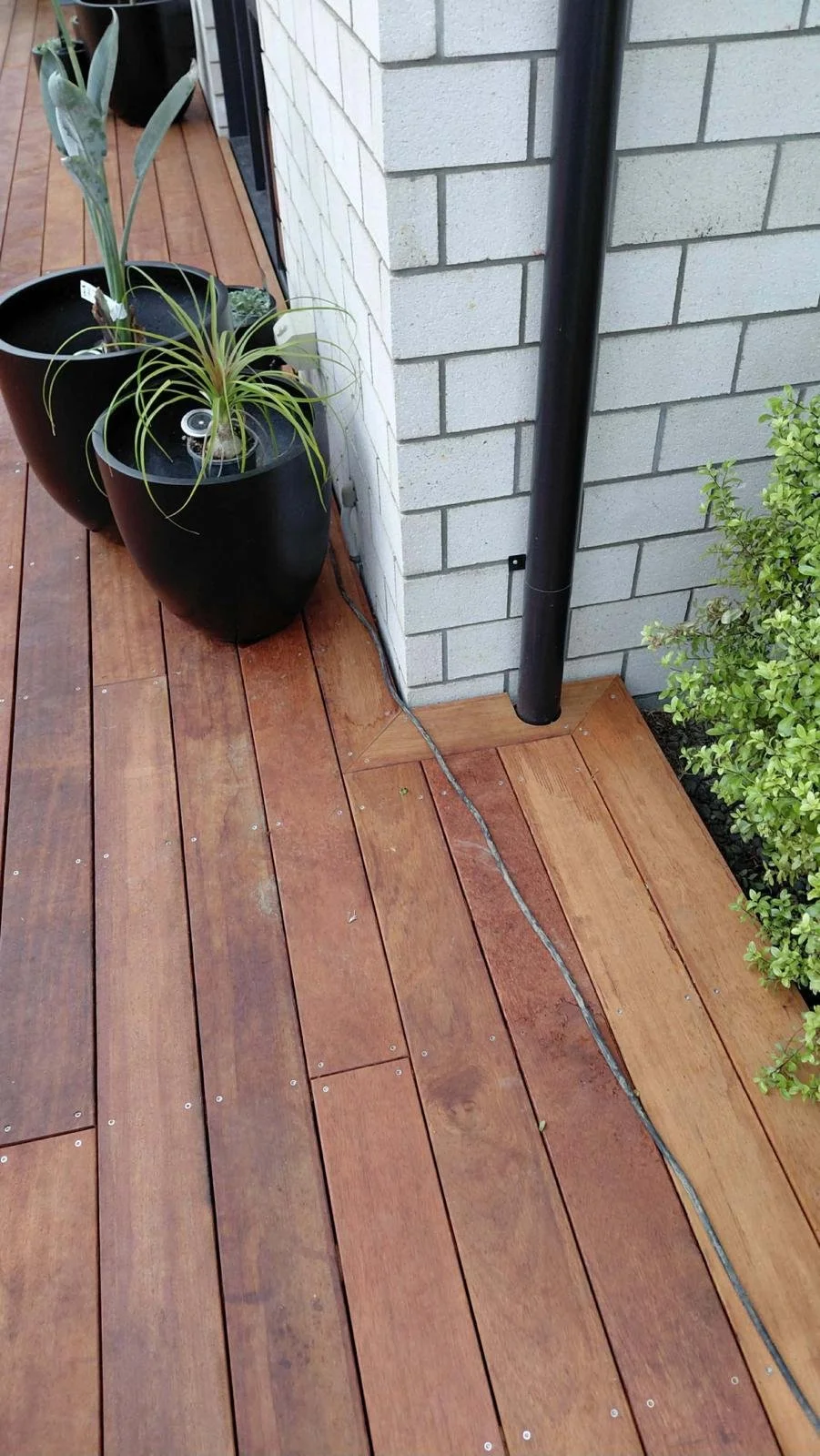
Building Consent for Ground-Level Decks in Tauranga
In New Zealand, certain decks may be exempt from building consent under Schedule 1 of the Building Act. Whether a ground-level deck qualifies depends on a combination of factors including total floor area, proximity to site boundaries, and whether the deck is attached to a building. Height becomes a direct trigger at 1500mm above ground level, but other thresholds can require consent well before that point.
Tauranga City Council has specific guidance that applies to properties within its boundaries, and rules for Western Bay of Plenty District Council properties may differ. If you are in any doubt, it is worth checking directly with the relevant council or seeking advice from a consent professional before you build.
Klinks does not manage the consent process on your behalf. What we can do is give you a clear picture of what your build involves so you can make an informed decision about whether to seek consent or professional advice.
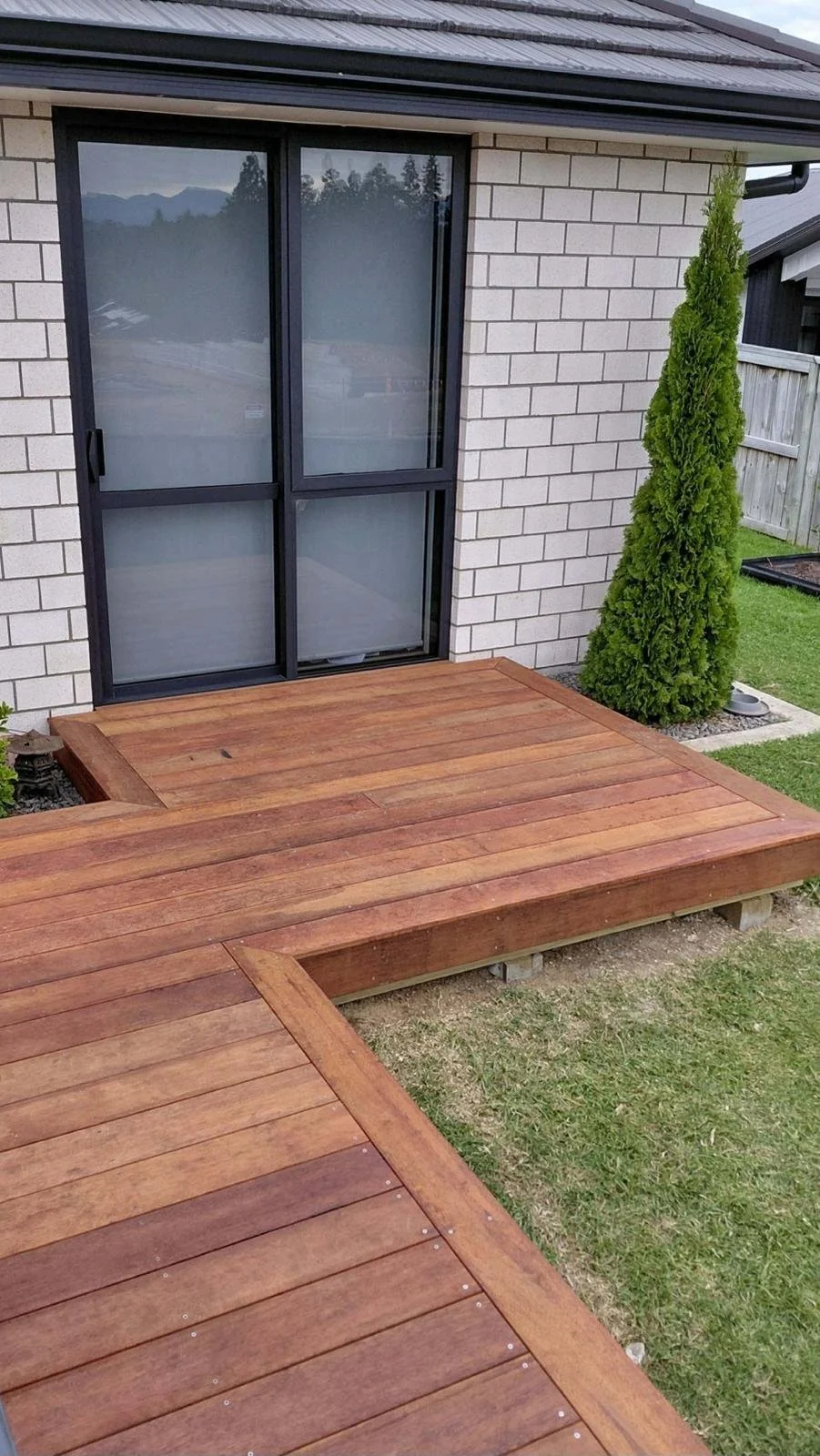
How Klinks Builds Ground-Level Decks
We start every job with a proper site visit and a conversation about how you want to use the space. We don't just take measurements and disappear — we want to understand whether you're building an outdoor dining room, a kids' play platform, a poolside lounge, or all three. That informs the layout, the materials, and the structural approach.
From there we'll work up a design that meets the building code structurally, incorporates your layout preferences, and accounts for the site conditions — drainage, sun exposure, access, and any features like steps or built-in seating. Once you're happy, we handle supply and build, managing the whole physical process from foundations to final board.
We work across Tauranga, Mount Maunganui, and Papamoa. If you're also thinking about a pergola over the deck, fencing around it, or a retaining wall at the boundary, we can scope all of that as part of the same project.
Frequently Asked Questions
How long does a ground-level deck take to build?
Most straightforward ground-level decks take two to five days to build once materials are on site. Larger or more complex decks with built-in features will take longer. We'll give you a realistic timeframe when we quote.
Do I need to do anything to prepare the ground under the deck?
We'll assess the ground as part of the build process. In some cases we'll lay weed matting under the deck to suppress growth and improve drainage. On very soft or poorly draining sites, some ground preparation may be needed before the frame goes down.
How long will a ground-level deck last?
A well-built deck using quality treated timber or hardwood, properly maintained by the homeowner, should last 20 years or more. Composite decking products come with manufacturer warranties of 25 years or longer. The biggest variable is maintenance — oiling and cleaning on a regular schedule makes a significant difference to timber longevity.
When should I oil or seal my deck?
With new treated pine, wait at least three to six months after build before applying any oil or sealant. The timber needs time to dry and settle. With hardwoods, timing varies by species. Composite decking doesn't require oiling at all. We'll advise you on what's appropriate for your specific build.
Can I build a ground-level deck myself?
Technically yes, if the deck falls within the exempt work categories. In practice, getting the framing level, the drainage right, and the fixings to code is harder than it looks. A deck that's not built to code can be a liability when it comes time to sell. We'd always recommend getting it done properly.
Will a deck add value to my home?
Generally yes, particularly in Tauranga where outdoor living is such a big part of how people use their homes. A well-built, well-designed deck that extends the living space is a genuine selling point. Poor-quality or unconsented decks can actually create issues at sale, so it pays to do it right.
Can Klinks add a pergola or fencing at the same time?
Absolutely. We regularly build decks alongside pergolas, privacy screens, fencing, and retaining walls. Doing it all at once is usually more efficient and cost-effective than coming back later