
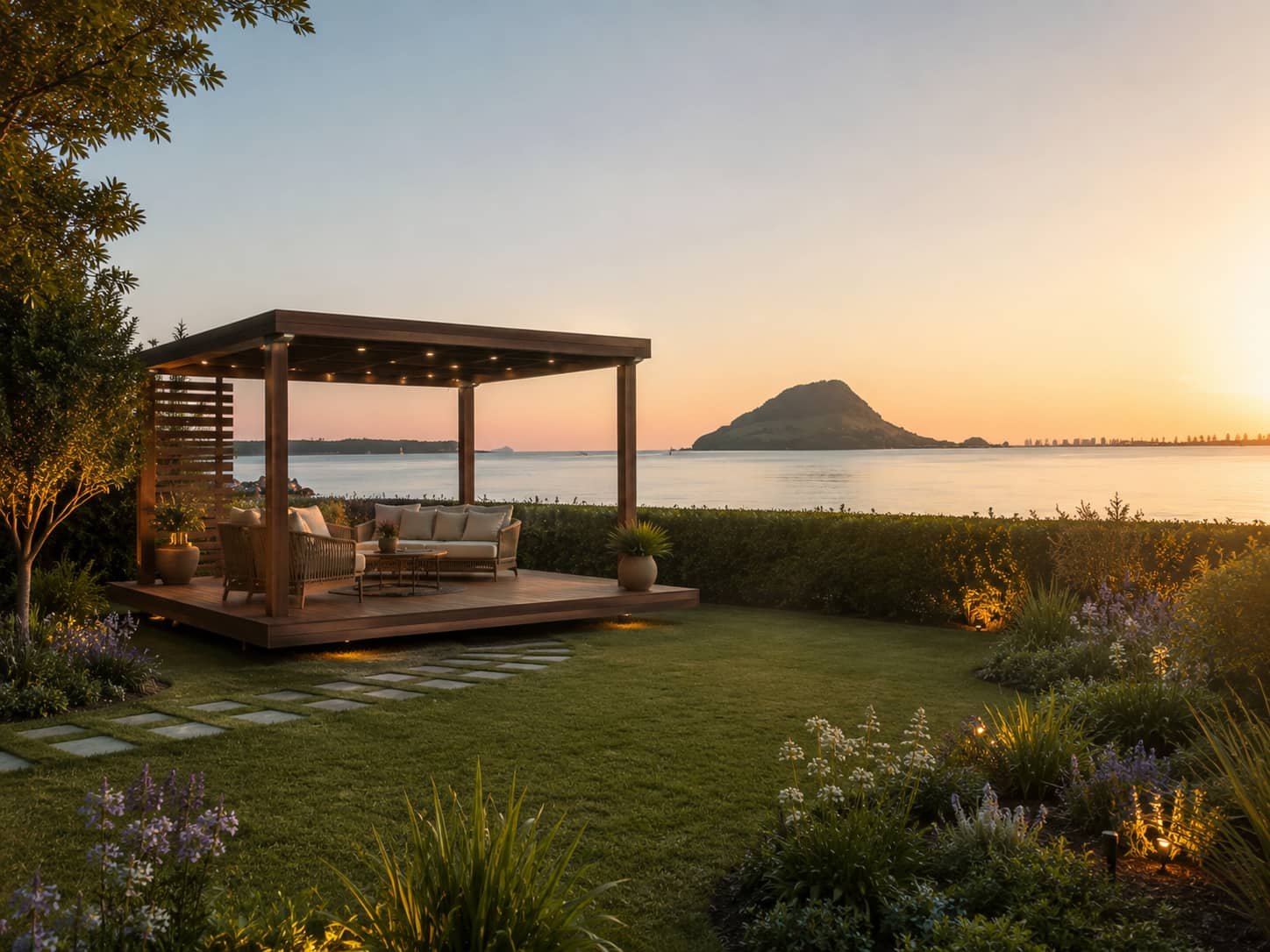
Floating Decks in Tauranga
Not every deck needs to hang off the house. A floating deck — one that stands entirely on its own structure, independent of the building — gives you more flexibility than most people realise. You can put it where the sun is best, where the view is best, or where the garden needs it most, rather than where the house doors happen to be.
What Is a Floating Deck?
A floating deck is a deck that doesn't rely on the house for structural support. It stands entirely on its own posts and foundations, with no ledger board fixed to the wall. It can sit right next to the house, or it may be positioned anywhere on the section.
Functionally, a floating deck right next to the house can feel virtually identical to an attached deck. You step out the door and onto the deck. But structurally, there's no connection. They're two independent structures sitting side by side.
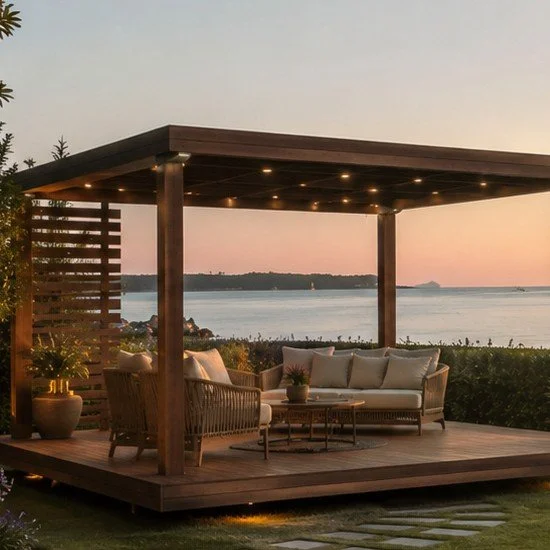
Why Choose Floating Over Attached?
There are several situations where floating is actually the smarter choice:
The architectural configuration makes a ledger connection complicated or impractical
You want to avoid any risk to the weathertight envelope. Some homeowners simply prefer not to penetrate the cladding
The deck will be positioned away from the house. A garden destination, poolside area, or outdoor room that isn't directly off a doorway
You want flexibility. A floating deck can theoretically be dismantled and relocated without affecting the house
The home is rented or has ownership arrangements where permanent structural connection to the building is undesirable
In Tauranga, we see floating decks most often in situations where the homeowner has a section that's a bit awkward. Its not quite flat or not adjacent to the main living areas. Or, where the house itself has a cladding or structural situation that makes attachment complicated.
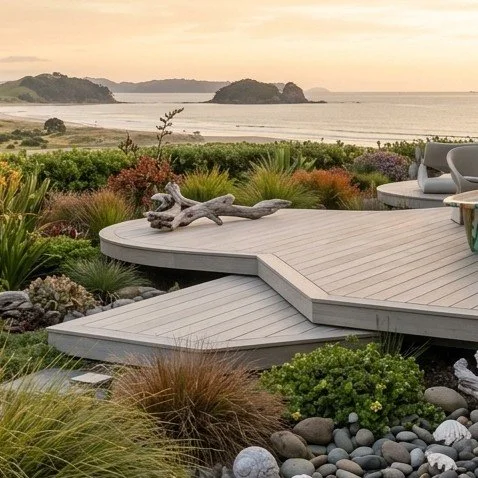
Does Floating Mean No Consent?
Not automatically. A floating deck still needs building consent if it exceeds the height and size thresholds under Schedule 1 of the Building Act. The fact that it's not attached to the house doesn't automatically push it into exempt territory. Height above ground, total area, and proximity to boundaries all affect whether consent is required.
What floating status does remove is the weathertightness-related consent complexity around the ledger connection. The consent application for a floating deck is generally more straightforward than for an attached one. But it's still the homeowner's responsibility to obtain, and we don't manage that process on your behalf.
Engineering requirements are similar to other deck types. If the deck is at any meaningful height, an engineer needs to sign off the structural specification. We'll work with your engineer or recommend one of ours.
Material Choices
All the same material options apply — treated pine, hardwood, composite.
Composite
For floating garden decks in particular, composite decking is worth considering. Garden environments tend to be more exposed to moisture, leaf litter, and ground-level humidity than decks right next to the house. Composite handles those conditions without the oiling schedule that timber requires.
Quality
The standard Klinks approach applies: we don't seal or oil timber post-build. The finishing is the homeowner's job once the timber has cured. We'll advise on timing and products.
Design Freedom
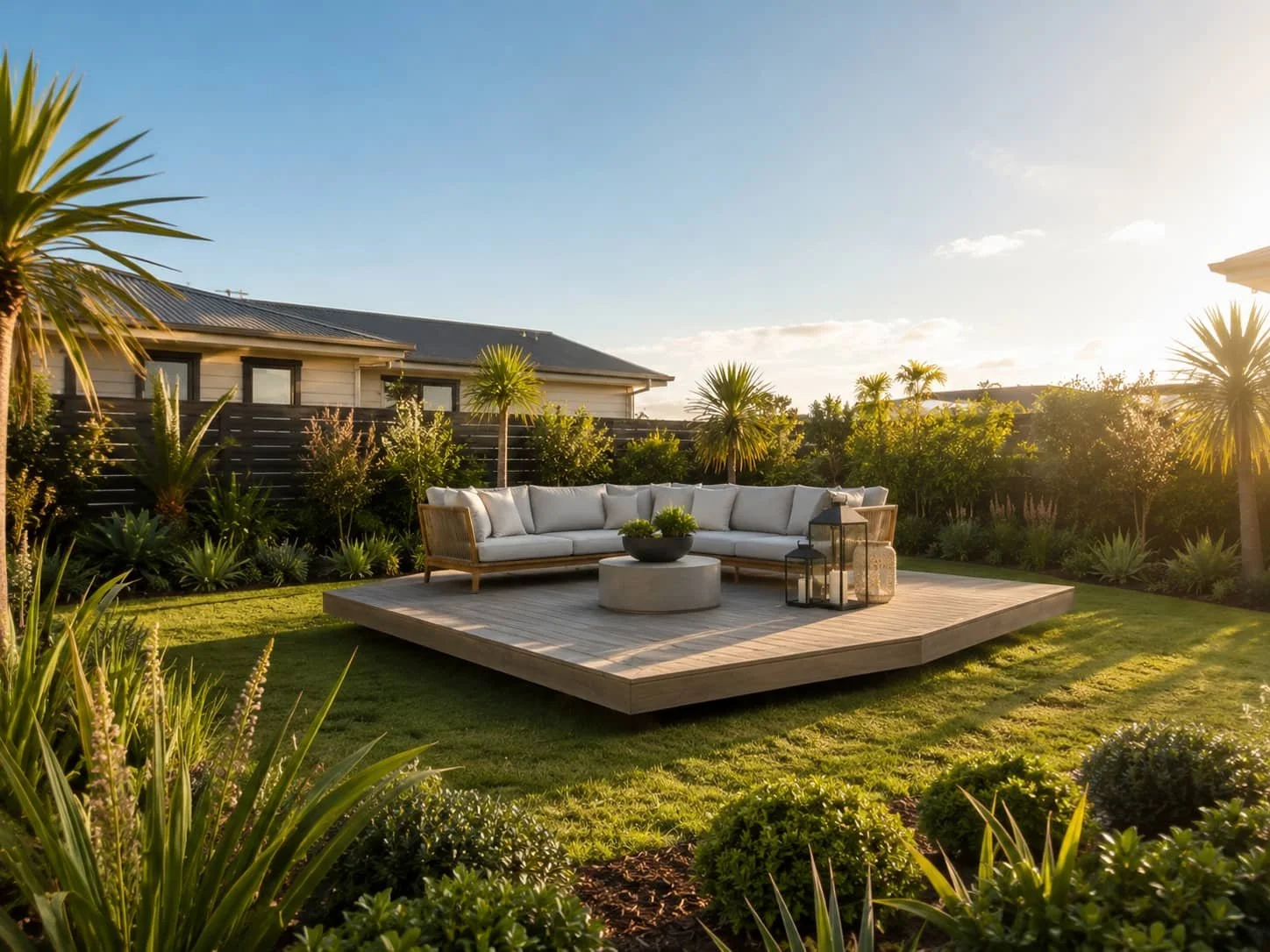
One of the most appealing aspects of a floating deck is the design freedom it offers. Because you're not constrained by where the house doors are, you can position the deck to optimise sun, view, privacy, or connection to a specific part of the garden. You can orient the board direction differently from the house. You can choose a shape that makes sense for the site rather than following the line of the building.
Some of the most striking decks we've built at Klinks have been positioned deliberately in the garden to create a destination rather than an extension, with a path or steps leading from the house down to an elevated platform that captures the view, or across the lawn to a shaded corner that's perfect for afternoon reading.
Combining Floating Decks with Other Structures
Floating decks pair particularly well with pergolas, where the deck provides the floor, the pergola provides the roof, and together they create an outdoor room that can be enjoyed in almost any weather Tauranga throws at it. We build pergolas, fencing, and retaining walls alongside deck projects all the time, and a floating deck with a pergola above it is one of our most popular combinations.
Frequently Asked Questions
How close to the house can a floating deck be?
As close as you like — it can be touching the house wall. A small gap between the deck and the wall is usually sensible for drainage and to allow for any differential movement, but there's no minimum gap required. It can feel virtually identical to an attached deck from the user's perspective.
Is a floating deck cheaper than an attached deck?
Generally they're similar in cost. A floating deck requires an additional row of posts along the house side (where an attached deck would have the ledger board doing that work), which adds some cost. But it avoids the more complex flashing and penetration work at the ledger, which can offset that. The two deck types are broadly comparable in cost for similar configurations.
Can a floating deck be used as a balcony off an upper-floor room?
Not practically — if the deck is at upper-floor height and right next to the house, attaching it is generally a better structural solution. True floating configuration at height adds significant structural cost and complexity. For upper-floor outdoor access, an attached balcony or deck is usually the right approach.
Will a floating deck move independently from the house?
In theory, yes — it's designed to be independent. In practice, both the house and a well-built floating deck are very stable structures that don't move perceptibly. The independence matters structurally and for weathertightness purposes, not because you'd notice the deck shifting.
Can Klinks build a floating deck anywhere on my section?
Yes, subject to the usual site considerations — access for materials and equipment, proximity to boundaries (which can affect consent), ground conditions, and any easements or covenants on the property. A site visit will identify any constraints early.
What's the process for getting started with Klinks?
Get in touch and we'll arrange a site visit. We'll look at the section, talk through what you're hoping to achieve, and give you a clear picture of what's involved. From there we'll work up a design and a quote. We cover Tauranga, Mount Maunganui, and Papamoa.